Thursday, November 5, 2009

Book Review: Use of Weapons by Iain M. Banks

Use of Weapons Use of Weapons by Iain M. Banks


My rating: 4 of 5 stars

Wow. I loved reading this book.

It concerns a man called Cheradenine Zakalwe, a warrior who is hired by a seemingly benign organization, called the Culture, to push wars the Culture can't stop one way or the other. He acts as a warrior, general, spy, and commando as needed.

He is wanted for a major mission, but he has vanished. Sma, a woman who is his handler goes out to find him for this critical mission.

The structure of the book is part of the reading pleasure. There are two alternating sets of chapters that thread together. One chapter thread is in the book's present and each chapter moves forward in chronological order. These chapters are titled "One," "Two," and so on. The intervening chapters are exploring Zakalwe's past, and they are moving backwards in time with each chapter. These are titled "XIII," "XII," counting down as they go further into the past.

And Zakalwe has a deeply troubled past.

View all my reviews >>

Saturday, October 17, 2009

Book Review: Eisenhorn by Dan Abnett

Eisenhorn (A Warhammer 40,000 Omnibus) Eisenhorn by Dan Abnett


My rating: 3 of 5 stars

Originally published as three novels, this is well written fiction set in a game world: the gothic science fiction game setting known as Warhammer 40k. I hate the idea of game world novels, but this book is surprisingly enjoyable. The author added two short stories between the novels, and I have to say, the first short story blew me away. The second was very good as well.

While the novels are SF thrillers, the short stories are mystery/horror, and my favorite parts of the collection.

The taught pacing kept me turning pages and staying up late. My main criticism: I found the ending a bit underwelming. It made sense, wrapped up the main threads, and was well written. But after a wild train ride with plenty of high points, it was just one more. I wanted something bigger.

That said, quite an enjoyable read. The emotional highs and lows were well done and carried me along. The action scenes were fast and furious.

If you like gothic space opera, you'll like it. If you have any interest in the Warhammer 40k world, read this book. If you play Dark Heresy, you *must* read this book.

View all my reviews >>

Friday, October 16, 2009

Gnomes Love Me


My Rogue Trader review got a mention in the latest Gnome Stew.

Thank you Martin and Gnomes everywhere.

Sunday, October 4, 2009

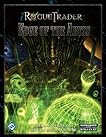
Game Book Review: Rogue Trader RPG: Core Rulebook

Rogue Trader RPG: Core Rulebook Rogue Trader RPG: Core Rulebook by Fantasy Flight Games


My rating: 4 of 5 stars

This is the new Warhammer 40,000 role playing game from Fantasy Flight Games (FFG). I'm looking at the collector's edition, but aside from the binding, the paper, and the case it comes in, it's the same content as the normal edition.

I can think of two types of people who may be interested in this book, and I'll try to address each of them. Number one, people who are interested in playing the game, either as a player or a Games Master (GM). Second, since this is an offshoot of Dark Heresy, another game set in the same grim future, would Rogue Trader be useful as a source book for that game?

What's special about this game? The players start out with their own starship, and in charge of a crew that numbers in the tens of thousands. They have so much money, they don't bother to count it. They are outside the Empire of Man, and a law unto themselves (mostly). There is starship combat, exploration, black market dealing, and buying and selling of entire worlds. Big scope.

All the rules for playing the game are here in this one book. This core book is for both the GM and the players. You can count on plenty of supplements being published in the future, but they are not required. You can buy this book, some dice, and play for years.

The rule set is based on the same rules used in Dark Heresy. And the Dark Heresy rules were based on the rules from the second edition of Warhammer Fantasy Role Play. Which is interesting, because FFG just abandoned those rules for Warhammer Fantasy Role play and are coming out with a total redesign for a third edition.

In any case, players familiar with Dark Heresy will feel right at home in Rogue Trader. In fact you can bring your Dark Heresy characters right in and they will work in Rogue Trader adventures. Combat works the same way, the skills and talents overlap considerably, and equipment is interchangeable. Psychic power has gotten a makeover, and is more similar to the rules for everything else, abandoning the dice pool for the same percentile dice roll used for navigating a starship, shooting a bolt gun, or charming an ambassador. There are conversions from Rogue Trader psychic powers to those in Dark Heresy and back again.

Rogue Trader is a fine sourcebook for Dark Heresy GMs. They could use almost everything in this book. Not the profit and commerce rules, but pretty much everything else. Dark Heresy characters at the end of rank five are about as powerful as starting Rogue Trader characters. A heretic Rogue Trader would be an interesting and powerful high level challenge for a group of Dark Heresy acolytes near their top ranks.

For people unfamiliar to Dark Heresy, the basic rules are simple: roll percentile dice to do anything, trying to roll you skill or under. If you roll well under or well over, special things happen, either for or against you. Complexity comes from what skills you have, how they are modified, and what toys (more on that later) you get to use. Like most role playing games, the complexity is layered on, and the game starts out with a limited number of choices and then grows more interesting as new avenues open up. Note that anything Warhammer 40,000 is not realistic science fiction simulation. Over the top cool beats realism 100% of the time in this Gothic future.

What if you know nothing about the Warhammer 40,000 world? Unlike the new fourth edition of Dungeons and Dragons rulebooks, this book is fun to read. It is drenched in deep background. I think you could pick up the main thrusts of this grim and Gothic future with just this book. If you want more, there are plenty of books, games (computer and tabletop), and websites full of 40K backstory. Certainly for a player, this is all you need. GM's will probably be drawn to finding out more. I'm sure FFG will be cranking out supplements for some time full of information.

I am impressed with the starship combat rules. Every player character has important work to do, every round. The rules cover ramming and boarding action. The rules are abstract, cinematic, and evocative. But if you get a direct hit on your opponent's warp drives? Try not to be too close and get sucked into the warp, perhaps forever.

But is it pretty? The art is fine, about on the level of a good graphic novel. Sometimes a very good graphic novel. Which is about par with most of art in Dark Heresy. However, it doesn't have the truly great art found mostly at Chapter Heads of Dark Heresy.

Problems:
There is no way to land on a planet. The players can design their own starship, but the book doesn't mention shuttles.
The rules cover how skilled the starship crew is, but not how that skill could be improved.
They mention retainers, which sound like high level crew members, but there are no rules to cover them.
There are suggestions on what to do if no one wants to play the Rogue Trader, but not the other top crew positions. What if there is no player navigator? And the crew is fairly unskilled? The ship might never go to its intended destination. That's when I think a high level NPC would be hired, but the GM will have to wing this.

Role Playing Game Checklist
  • Character Creation: Yes, including a varied background that allows characters to share past history with each other.
    • Character Origins cover Home World, Birthright (childhood), Lure of the Void (why they are driven to leave the Empire), Trials and Travails (past history), Motivation, and Career.
    • The career paths are: Rogue Trader, the captain; Arch-militant, the combat monster; Astropath Transcendent, the blind telepath; Explorator, the bionic engineer; Missionary, the fanatic priest; Navigator, the three eyed mutant who can guide the ship through the warp; Seneschal, the expert who can uncover the secrets; and Void-master, the pilot. There is plenty of room to customize each career, and all of them are useful in personal and ship to ship combat.
  • Cool Toys: Oh, just starships and chainswords (chainsaw-swords) and power armor. And alien artifacts, and, and, and...
  • Cool Powers: Every career has it's own shtick, a way to do something cool no one else can. Both the Astropath and the Navigator have psychic abilities.
  • GM Bits: A chapter on how to GM, three chapters on background, a chapter on bad guys and aliens, and a starting adventure (players should not read!)
  • Player Controlled Storytelling: Not much, not required, but some. Players are encouraged to come up with descriptions of their home world. Players can take the initiative and help create endeavors to increase their wealth, power and prestige. On a scale of 1 (4E) to 10 (Burning Wheel), I'd give Rogue Trader a 3 or a 4, depending on how it's played.
  • World Background: Well, Galaxy background. Three chapters devoted to it, and the rest of the book is drenched in world building. The game assumes the players will be exploring the Koronus Expanse, a sector of the galaxy that gets it's own chapter.
  • Monsters and Bad Guys: 36 pages of Adversaries and Aliens. You can also bring in any from Dark Heresy.
  • Sample Adventure: Yes, which introduces the players to the Koronus Expanse and touches on a some of the high points of the game. It looks like a fun one.

Overall: Great game. I'm still having fun with my Dark Heresy game, and will use this as a sourcebook until I, and my players, are ready to move over. I'm looking forward to it.

View all my reviews >>

Thursday, September 17, 2009

Book Review: The Amazing Adventures of Kavalier & Clay by Michael Chabon

The Amazing Adventures of Kavalier & Clay The Amazing Adventures of Kavalier & Clay by Michael Chabon


My rating: 5 of 5 stars

I read the Yiddish Policeman's Union first, and I really didn't want to like Kavalier & Clay better. Because I loved the Yiddish Policeman's Union, and because people said I had to. I'm so contrarian. They tie. For first place.

Both books deal with the Holocaust from an American perspective. This one deals with two Jewish wiseguys who help start the comic book business from offices in the Empire State Building. One wiseguy, Clay, is American, the other, Kavalier, a Czech refugee from Nazi occupied Prague.

The book is about many things. Secrets, love, the Holocaust, the Empire State Building, magic, Jews, Harry Houdini, the Golem of Prague, sex, and Comics. It is written as history, with fake footnotes and all. As if the Escapist, the comic book the characters create, was real and has fans and collectors today.

After the Yiddish Policeman's Union came out, much was made of Chabon writing genre fiction. After being awarded a Pulitzer for Kavalier and Clay and everything! Some people were upset. They obviously didn't read Kavalier & Clay closely. It drips with love of comics, magic, science fiction, and their fans. There are a few brief moments of magical realism in Kavalier and Clay, and references to Lovecraft pop up in the oddest of places.

Wonderful.

View all my reviews >>

Monday, September 14, 2009

RPG: Mouse Guard Impressions

I GM'd Mouse Guard for my old Seattle RPG group this past weekend. On the whole it was a great success. It took about an hour for all of us to get into it, and understand the rules.

When GMing, the rules tell you to find two challenges for the party, and just go for it. What they don't mention is what if the party succeeds? On failures, you can add all sorts of fun twists, but successes just succeed. Keeping the GM turn rolling for two hours could require a lot more than two encounters.

I used the sample mission "Find the Grain Merchant," and the sample characters. I used two others from other missions as I had six players. I added a lot more complications, as the game would have been over (the GM part) in about 30 minutes otherwise.

The Player Turn was interesting. Using the examples in the book, I could see that the players could keep the adventure going by spending points, but I'm still unsure how many points they would need to go and get into trouble and find the conspirators. The rules are very clear on how to spend points to heal. They need work on how the players can go off and create story.

All six players enjoyed the game and wanted to play more. Always a good sign. I suspect a rereading of the rules and some searches on forums will be in order before I play again.

Wednesday, September 2, 2009

Book Review: Light by M. John Harrison

Light Light by M. John Harrison

My rating: 4 of 5 stars

The Good: M. John Harrison's descriptions are so evocative, so immediate, they thrust me headlong into the scene. The pacing continually picked up as I read the novel, by the end I found myself hitting the next page button on my kindle before I finished the last line or two on the page. Pacing was relentless. The ending was a knockout, and brought revelations that astounded me. Wow.

The Bad: If I hadn't read this for my book club (Other Worlds Book Group, in Lake Oswego, Oregon), I probably would have put it down and never finished it. It's an ensemble book, and of all the point of view characters, I found it a slog to read all but one: Seria Mau Genlicher. A serious anti-hero, she grabbed my attention from the start. The others made my eyes blur, and wonder why I wasn't doing something productive, like playing World of Warcraft. Thank god for Harrison's stunning descriptions, that's all I had to hang on to. About a fifth of the way through the book, the slog stopped and real enjoyment took over. Rebeca, from my book group, didn't get to that point until midway through the book.

The Ugly: What could be more boring than sex or serial killing? In this book, not much. An alien race that looks like Irish junkies who masturbate every 20 minutes sounds like a set-up for some edgier version of Douglas Addams, but in Light it's just more evidence of how dreary everything is. We get a serial killer who claims he's driven to kill, but really seems unconnected.
Do women exist who don't greet men with an offer/demand of instant sex? It's hard to find them in this book, and given how distant, gray, and emotionless almost all the sex is depicted as, you have to wonder why they bother.

And Yet: I ended up loving this book. The ensemble starts to work, often by the introduction of minor characters, like Anna, who bring focus and insight into characters who failed to grab me at the start.
The structure of the book is a real strength, with jumps from the present day to 400 years in the future, that tie together seemlessly.
The cloud of despair lifts as the pace throttles up to full tilt, and by the end the book is awash in a gonzo intensity.

If you start this book and find yourself wavering, keep going. If you're going to go into Light, go deep.

View all my reviews >>